



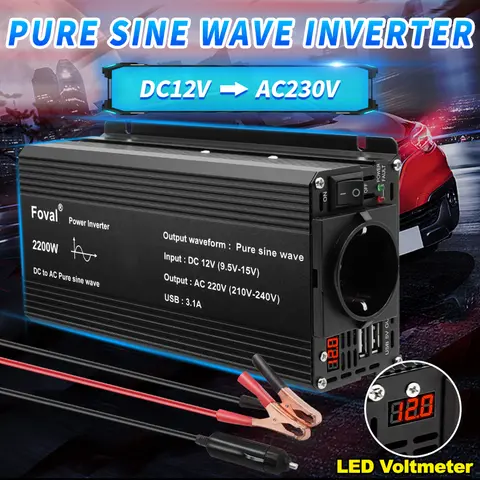


Results for universal voltage
Universal voltage devices are essential for global electronics compatibility, ensuring safe and efficient operation across diverse power supply environments—from 12V automotive systems to 220V AC household outlets. These versatile power solutions support multiple input voltages and deliver stable, regulated output, making them ideal for charging, testing, and powering a wide range of devices worldwide.
When selecting universal voltage solutions, consider key technical specifications to avoid common pitfalls. For instance, ensure the input voltage range matches your local power supply—many modules support AC 220V input, ideal for European and Asian markets. Output stability is critical: look for modules with low ripple and high efficiency, such as the 1A/2A Type-C and USB voltage regulators that deliver clean DC 5V output with minimal voltage drop under load.
To help you choose the right product, follow these steps:
For DIY and electronics projects, the V23040-A0004-B201 and V23040-A0002-B201 12V/24V modules offer reliable step-down conversion with compact packaging (6×3×2 cm), ideal for embedded systems. The 1A 5W transformer with 10-piece packaging is perfect for bulk use in surveillance or IoT devices. Meanwhile, the Ziqqucu 1A/2A Type-C USB voltage regulator provides plug-and-play compatibility with modern devices, featuring a 30CM red-black wire and 20CM white line for easy integration.
In summary, universal voltage components are not just about compatibility—they’re about reliability, safety, and long-term performance. Choose based on verified specs, real-world usage data, and clear technical documentation to ensure your devices operate efficiently across any power environment.
- Universal Voltage
- A power system or component designed to operate reliably across a broad range of input voltages (e.g., 100–240V AC or 5–24V DC) without requiring manual adjustment, enabling seamless use in different regions and applications.
- Voltage Regulator
- A circuit or module that maintains a consistent output voltage despite fluctuations in input voltage or load, ensuring device safety and performance.
- DC Step-down Converter
- A power supply device that reduces a higher DC input voltage to a lower, stable output voltage (e.g., 220V AC to 5V DC), commonly used in USB charging and embedded systems.
When selecting universal voltage solutions, consider key technical specifications to avoid common pitfalls. For instance, ensure the input voltage range matches your local power supply—many modules support AC 220V input, ideal for European and Asian markets. Output stability is critical: look for modules with low ripple and high efficiency, such as the 1A/2A Type-C and USB voltage regulators that deliver clean DC 5V output with minimal voltage drop under load.
To help you choose the right product, follow these steps:
- Identify your power source—Is it AC mains (e.g., 220V) or DC (e.g., 12V/24V automotive)? Match the input voltage range of the module accordingly.
- Check output requirements—Ensure the output voltage (e.g., DC 5V) and current (e.g., 1A or 2A) match your device’s needs. Overloading can cause overheating or failure.
- Verify safety certifications and build quality—While some modules are uncertified, prioritize those with robust heat dissipation and stable performance under continuous use, especially in high-temperature environments (e.g., up to +85℃).
- Test before full deployment—Use a digital USB voltage tester to confirm stable output under real-world conditions, especially when powering sensitive electronics like cameras or power banks.
For DIY and electronics projects, the V23040-A0004-B201 and V23040-A0002-B201 12V/24V modules offer reliable step-down conversion with compact packaging (6×3×2 cm), ideal for embedded systems. The 1A 5W transformer with 10-piece packaging is perfect for bulk use in surveillance or IoT devices. Meanwhile, the Ziqqucu 1A/2A Type-C USB voltage regulator provides plug-and-play compatibility with modern devices, featuring a 30CM red-black wire and 20CM white line for easy integration.
In summary, universal voltage components are not just about compatibility—they’re about reliability, safety, and long-term performance. Choose based on verified specs, real-world usage data, and clear technical documentation to ensure your devices operate efficiently across any power environment.