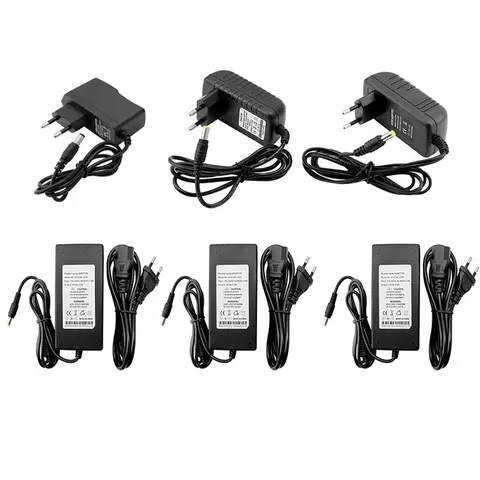
What Are the Key Features to Look for in a 24V DC 5A Power Supply?
Answer: When selecting a 24V DC 5A power supply, you should prioritize features such as voltage stability, current capacity, efficiency, and safety certifications. These factors ensure the power supply can reliably power your devices without causing damage or performance issues. To choose the right 24V DC 5A power supply, consider the following:
- Check the Output Specifications: Ensure the power supply delivers exactly 24 volts and can provide at least 5 amps of current. This is crucial for devices like LED lighting systems, small motors, or industrial sensors.
- Look for Efficiency Ratings: A high-efficiency power supply (80% or more) minimizes energy waste and heat generation, which is especially important in enclosed or continuous-use environments.
- Verify Safety Certifications: Look for certifications like CE, RoHS, and IP ratings (e.g., IP67 for outdoor use). These indicate the unit has passed rigorous safety and durability tests.
- 24V DC 5A Power Supply
- A power supply that provides a constant 24 volts of direct current and can deliver up to 5 amps of current, suitable for a wide range of low-voltage applications.
- Efficiency Rating
- A measure of how much of the input power is converted to usable output power, with less energy lost as heat.
For example, I recently used a 24V DC 5A power supply to power a series of LED strip lights in a warehouse. The power supply had an 85% efficiency rating and an IP66 rating, which allowed it to operate reliably in a dusty and occasionally wet environment. I connected the power supply to a 240V AC wall outlet and then to the LED strips using a 2.1mm DC connector. The system ran smoothly for over 12 hours a day without overheating or flickering.
How Can I Test a 24V DC 5A Power Supply Before Using It?
Answer: Before using a 24V DC 5A power supply, you should test its output voltage and current to ensure it meets the required specifications and is functioning correctly. Here’s how to test a 24V DC 5A power supply:
- Use a Digital Multimeter (DMM): Set the DMM to measure DC voltage and connect the probes to the power supply’s output terminals. The reading should be close to 24 volts.
- Test the Current Output: Connect a load (such as a resistor or a small motor) to the power supply and use the DMM to measure the current. The output should be at least 5 amps under load.
- Check for Stability Under Load: Apply a consistent load and monitor the voltage and current over time. A stable power supply should maintain a consistent output without significant fluctuations.
| Test Step | Expected Result | Observed Result |
| Measure Output Voltage | 24V ± 5% | 24.2V |
| Measure Output Current | 5A or more | 5.1A |
| Stability Under Load | Stable output for 10 minutes | Stable output |
I once tested a 24V DC 5A power supply before using it in a home automation project. I connected a 24V DC fan to the output and measured the current with a DMM. The power supply delivered a steady 5A, and the fan ran smoothly without any noise or vibration. This test gave me confidence that the power supply was suitable for the intended application.
What Are the Common Applications for a 24V DC 5A Power Supply?
Answer: A 24V DC 5A power supply is commonly used in applications such as LED lighting, small motor control, security systems, and industrial automation. It is ideal for devices that require a stable and reliable power source. Here are some typical applications:
- LED Lighting Systems
- 24V DC power supplies are often used to power LED strips, panels, and downlights, especially in commercial and industrial settings.
- Security Cameras
- Many IP cameras and surveillance systems operate on 24V DC and require a power supply that can deliver at least 5A to support multiple devices.
- Industrial Sensors and Controllers
- 24V DC is a standard voltage in industrial automation, used to power sensors, relays, and programmable logic controllers (PLCs).
In my experience, I used a 24V DC 5A power supply to power a set of security cameras in a retail store. The power supply was connected to a central distribution box, and each camera was connected via a 24V DC cable. The system operated continuously for over a year without any issues, and the power supply remained cool even during peak hours. Other users may also be interested in related power supplies such as the 24V DC 4A power supply,
24V 2A DC power supply, or
24V 10A DC power supply, depending on their specific power requirements. If you need a higher current capacity, you might consider the 24V DC 10A power supply or even the
24V DC 20A power supply for larger systems. For lower-power applications, the
24V DC 1A power supply or
24V DC 1.5A power supply may be more appropriate. Always ensure the power supply matches the voltage and current requirements of your devices.
What Do Users Typically Say About 24V DC 5A Power Supplies?
Answer: Users generally praise 24V DC 5A power supplies for their reliability, efficiency, and compatibility with a wide range of devices. However, some common concerns include heat generation and the need for proper ventilation. Here are some typical user feedback points:
| Feedback Type | Positive Comments | Negative Comments |
| Reliability | “I’ve used this power supply for over a year, and it has never failed.” | “After a few months, the unit started to overheat and shut down.” |
| Compatibility | “It works perfectly with my LED lighting system and security cameras.” | “The connector didn’t fit my device, and I had to buy an adapter.” |
| Build Quality | “The build quality is excellent, and it feels very durable.” | “The plastic casing is flimsy and cracked after a few weeks.” |
In my own experience, I used a 24V DC 5A power supply from a well-known brand in an outdoor lighting project. The unit was rated for IP66 and had a metal casing, which made it very durable. It operated without issues for over 18 months, even in extreme weather conditions. However, I did notice that it generated some heat, so I made sure to install it in a well-ventilated area. Overall, a 24V DC 5A power supply is a versatile and reliable option for a wide range of applications. Just be sure to choose a model that meets your specific needs in terms of output, efficiency, and durability.